

My Friend Keeps “Forgetting” Their Wallet. Help!


Dear Curious Christie and Ms. Resilient,
I have a friend who keeps “forgetting” their wallet when we go out, but somehow never forgets how to order appetizers, an extra drink, or dessert.
At first, I didn’t mind covering them. Things happen. Cards get left at home. Venmo glitches. But this has become a pattern, and I’m starting to feel less like a friend and more like a small, underfunded grant program.
The awkward part is that they’re fun to be around, and I don’t want to blow up the friendship over money. But every time the check comes, I feel myself tense up, waiting for the wallet pat-down, the surprised face, and the “Oh no, I totally forgot.”
I’ve tried joking about it, but nothing changes. I’ve waited to see if they’ll pay me back, but unless I remind them multiple times, it doesn’t happen. Meanwhile, I’m getting resentful, which feels gross.
How do I set a boundary without making dinner awkward? Do I say something before we go out? Do I stop inviting them to places that cost money? Do I ask for separate checks immediately like I’m entering a legal contract with the server?
I want to be generous, but I don’t want to keep funding their lifestyle while pretending I’m fine. How do I handle this directly without sounding cheap, petty, or like I’m keeping a spreadsheet titled “Friendship Debt”?
Signed,
~Done Being the Appetizer Angel

Dear Done Being the Appetizer Angel,
Yikes. There is “I forgot my wallet,” and then there is “I forgot my wallet but remembered my love of artisanal burrata.” One is an accident. The other is a pattern wearing a tiny little coincidence hat.
You are not wrong to feel resentful. Resentment often shows up when generosity has quietly crossed the border into obligation. And once your body starts bracing for the check, it’s time to make a different choice.
It may help to remember that people grow up with very different norms around money. For some people, being treated again and again feels normal, casual, even relational. For others, it feels uncomfortable, unequal, or unfair. Your friend may not be trying to take advantage of you, but impact still matters. Different money histories do not mean you have to keep paying for the appetizers.
Could you have a direct conversation? Absolutely. You are allowed to say, “Hey, I need us to each cover our own costs when we go out.” That is clear, fair, and not remotely petty.
But if that feels like too much right now, you do not have to start with a dramatic friendship summit over calamari. A gentle first boundary is to stop choosing activities where money becomes the main character.
Shift the invitation. Instead of dinner, try: “Want to go for a walk Saturday?” Or, “Want to come over for coffee?” Or, “Let’s meet at the park.” Free or low-cost plans let you enjoy the friendship without setting yourself up to become the emergency wallet with legs.
And if you do go somewhere that costs money, set the boundary before the check arrives: “Just a heads-up, I’m only covering myself tonight.”
Then watch what happens. If your friend adjusts and still wants to spend time with you, great. If they disappear when the free appetizers do, that gives you information.
You do not have to fund the friendship to keep it.
With compassion and separate checks,
Curious Christie
Ms. Resilient offers her perspective using Dovetail Learning’s approach:
Dear Done Being the Appetizer Angel,
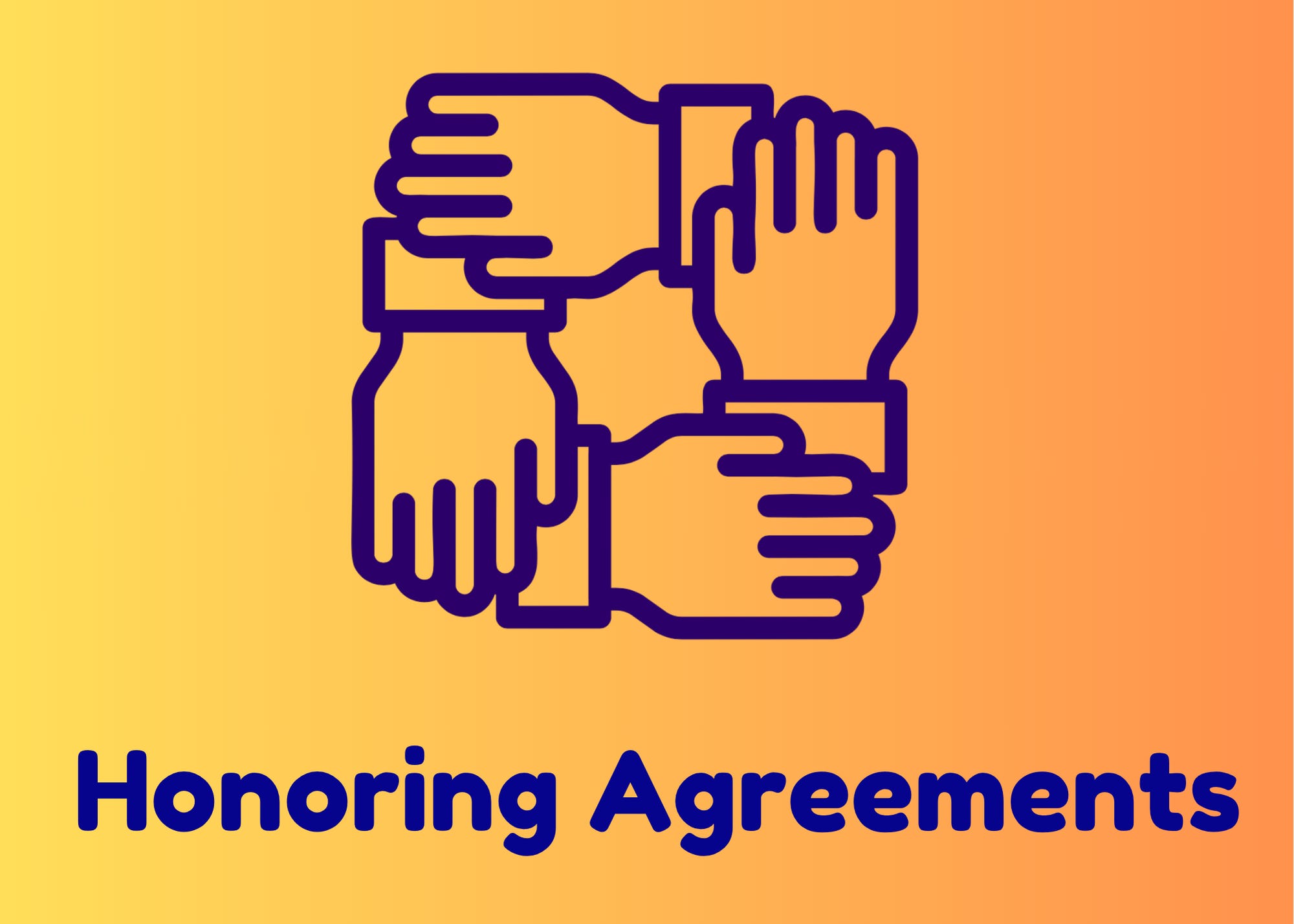
Christie is warmly grounding this in the Collaborating Skill of Honoring Agreements.
Honoring Agreements is about clarity and follow-through—making expectations visible and then acting in alignment with them. And importantly, it includes your agreement with yourself about what you will and won’t continue to do.
Right now, this pattern is continuing because there’s an unspoken agreement in the relationship: you cover, they don’t. It’s not intentional, but it’s happening. And over time, that can pull you into Protective Patterns like Avoiding (not addressing it to keep things easy) or Hyper-Caretaking (absorbing the cost to preserve the connection).
Keep in mind that both you and you friend have Cultural Patterns around money that could be influencing this. Some people are raised with a “whoever has it, shares it,” and allowing others to pick up the check shows a tight connection. Others are taught that fairness means everyone pays their own way. When those Patterns go unnamed, it’s easy for one person to feel taken advantage of while the other feels everything is fine.
Christie gently shifts you out of that.
When you say, “I’m only covering myself tonight,” or when you choose plans that don’t require you to pay, you are resetting the agreement—and then honoring it. Not with a lecture, not with resentment, but with consistent action.
That’s what builds self-trust.
And here’s the quiet truth underneath it:
Boundaries don’t make relationships awkward—unclear expectations do.
You’re not being petty.
You’re bringing the friendship back into balance.
Warmly,
Ms. Resilient

Got advice, a story, or a reframe forDone Being the Appetizer Angel? Share it below or email us — we might highlight your thoughts in an upcoming issue.
We want to hear from you!
Ready for a little reflection and real talk? Click the button or write to ms@dovetaillearning.org.
P.S. Liking our posts is the quickest way to spread a little love—and if you share them, you’re officially part of our story-spreading team (cape optional, gratitude guaranteed!).
We’ve dreamed about the We Are Resilient App for a long time, and it’s finally here!* The app offers everyday resilience practices and reflections, while The Heart of Resilience provides the deeper framework in print, ebook, and audio form. You’ll find both, along with more support, at Dovetail Learning.
*for Apple users. Android coming soon.